 EmTech Media
Win 10 / 11 · Maintenance
Fix a blue screen (BSOD) without panicking
A blue screen looks dramatic but it's usually Windows protecting itself from a bad driver or a flaky stick of RAM. The stop code tells you which.
Before you start
Medium risk. This change is reversible — you can return to the previous state without professional help or data loss.
What usually goes wrong
- Turn off automatic restart first or the screen vanishes before you can read it: System Properties → Advanced → Startup and Recovery → uncheck 'Automatically restart'.
- When the stop code is vague, the crash dump isn't. Minidumps land in C:\Windows\Minidump, and a free reader like BlueScreenView names the offending driver in seconds — no debugger to install.
- Blue screens that only arrive under load — gaming, rendering, long file copies — point at heat or the power supply rather than a driver. Check temperatures before you start rolling drivers back.
- If Windows won't stay up long enough to change anything, do the rollback from Safe Mode instead of fighting the desktop.
Steps
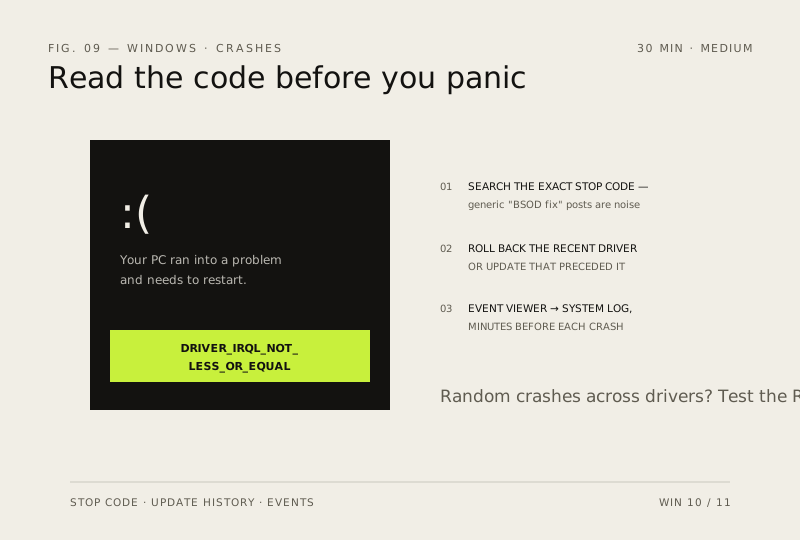
- Read the stop code at the bottom (e.g. DRIVER_IRQL_NOT_LESS_OR_EQUAL) and search that exact string — generic 'BSOD fix' articles are mostly noise
- If it started after an update or a new driver, roll back: Settings → Windows Update → Update history → Uninstall updates, or Device Manager → Roll back driver on the suspect device
- Event Viewer → Windows Logs → System: look for red errors in the minutes before each crash — they name the culprit file
- Run Windows Memory Diagnostic (search 'mdsched') to rule out bad RAM; a failing stick shows up as random BSODs across different drivers
How to verify the fix
No new BSODs after the rollback/driver change, and Event Viewer shows no red errors in the minutes before past crashes.
If this didn't fix it
BSODs continue with different stop codes — bad RAM is likely; run Windows Memory Diagnostic and test sticks one at a time.
Next stop: the related fixes below, or start a guided diagnosis.