 EmTech Media
Win 10 / 11 · Speed
Hunt down memory hogs
Full RAM is the quiet cause of most 'sluggish' complaints. Find what's eating it and put a ceiling on it.
Before you start
Medium risk. This change is reversible — you can return to the previous state without professional help or data loss.
What usually goes wrong
- Don't shrink or disable the paging file to reclaim space. Set it too small and Windows can't write a crash dump, so the next blue screen tells you nothing at all. Leave it system-managed unless you have a specific reason not to.
- High memory use is not by itself a fault. Windows deliberately fills spare RAM with cache and hands it back on demand — the numbers worth watching are committed memory and hard faults, not the percentage.
- End Task on something you don't recognise can take the desktop or the network down with it. Search the process name before you kill anything running as SYSTEM.
- A leak that only surfaces after days of uptime won't show up in a ten-minute look. Leave Performance Monitor logging overnight and read it in the morning.
Steps
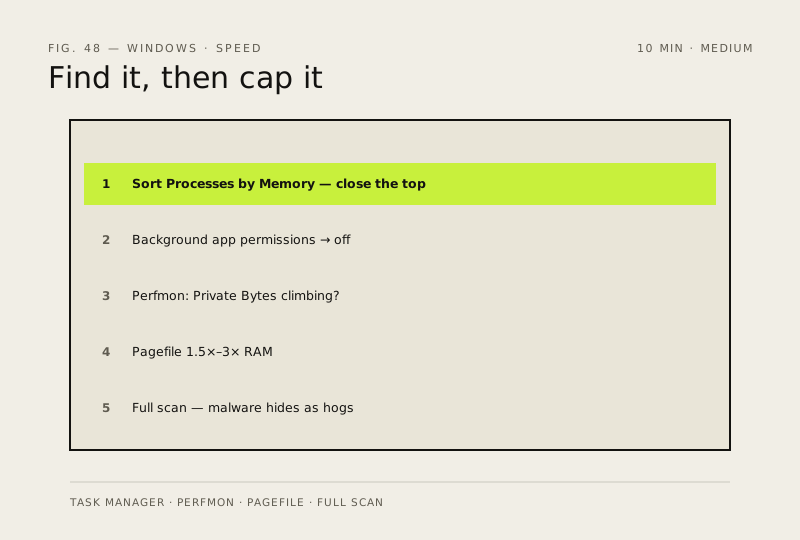
- Ctrl + Shift + Esc → Processes tab → sort by Memory — close or End Task anything you don't need at the top
- Settings → Apps → Installed apps → three dots next to an app → Advanced options → Background app permissions → 'In background' off for anything that doesn't need it
- Hunting a leak: Win + R → perfmon → Monitoring Tools → Performance Monitor → add Process > Private Bytes — a line that climbs and never falls is your culprit; update, restart or replace that program
- Size the paging file: search 'View advanced system settings' → Settings → Advanced → Change → Custom size, initial 1.5× RAM in MB, max 3× (8 GB → 12,288 / 24,576) → restart
- Windows Security → Virus & threat protection → Full scan — malware loves to hide as a memory hog; run it monthly
How to verify the fix
Memory usage stays below the ceiling you set, and no process's private bytes climb forever in Performance Monitor.
If this didn't fix it
RAM pressure returns within days — the leak is back or another app is hogging memory; re-run the scan.
Next stop: the related fixes below, or start a guided diagnosis.